
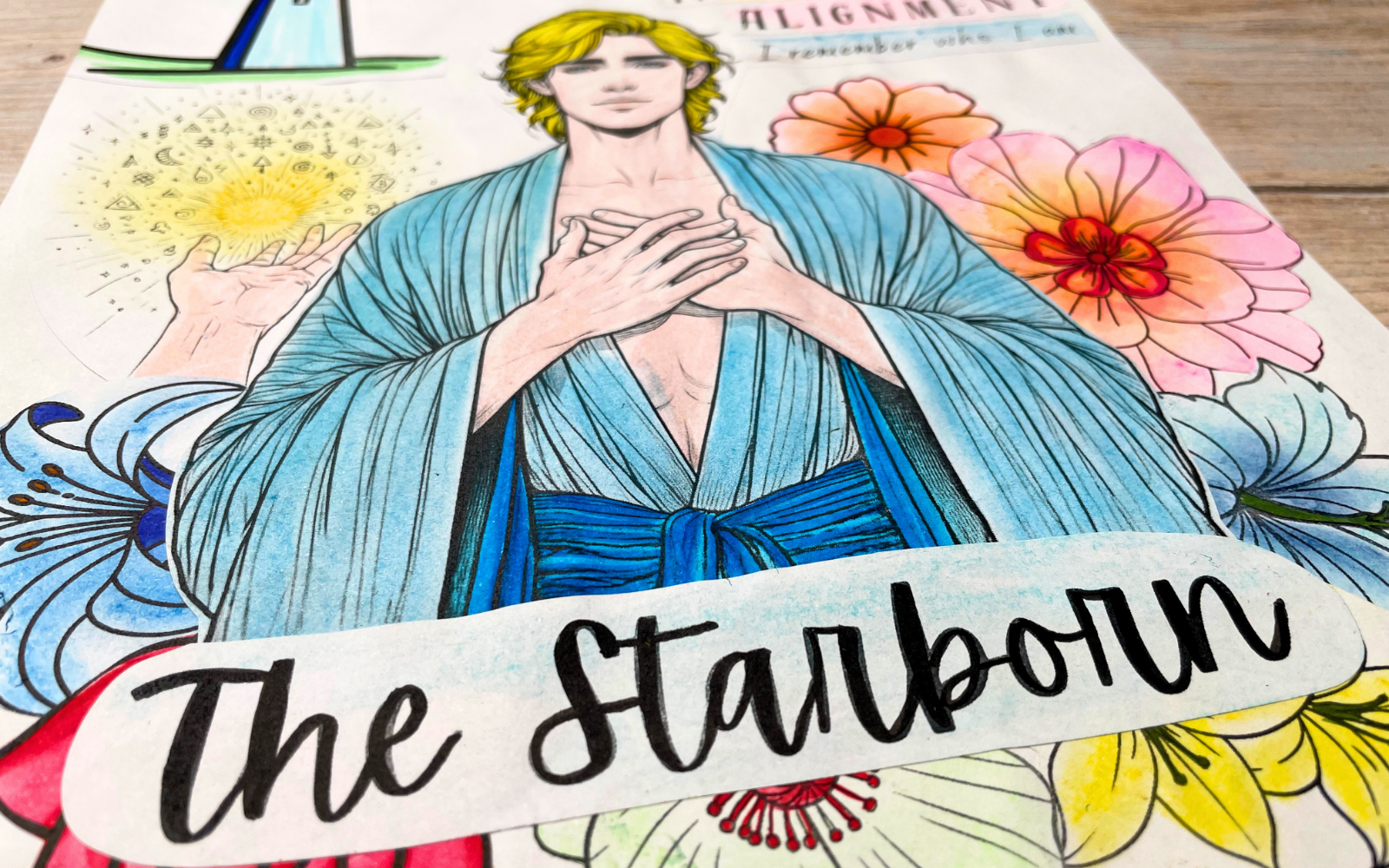
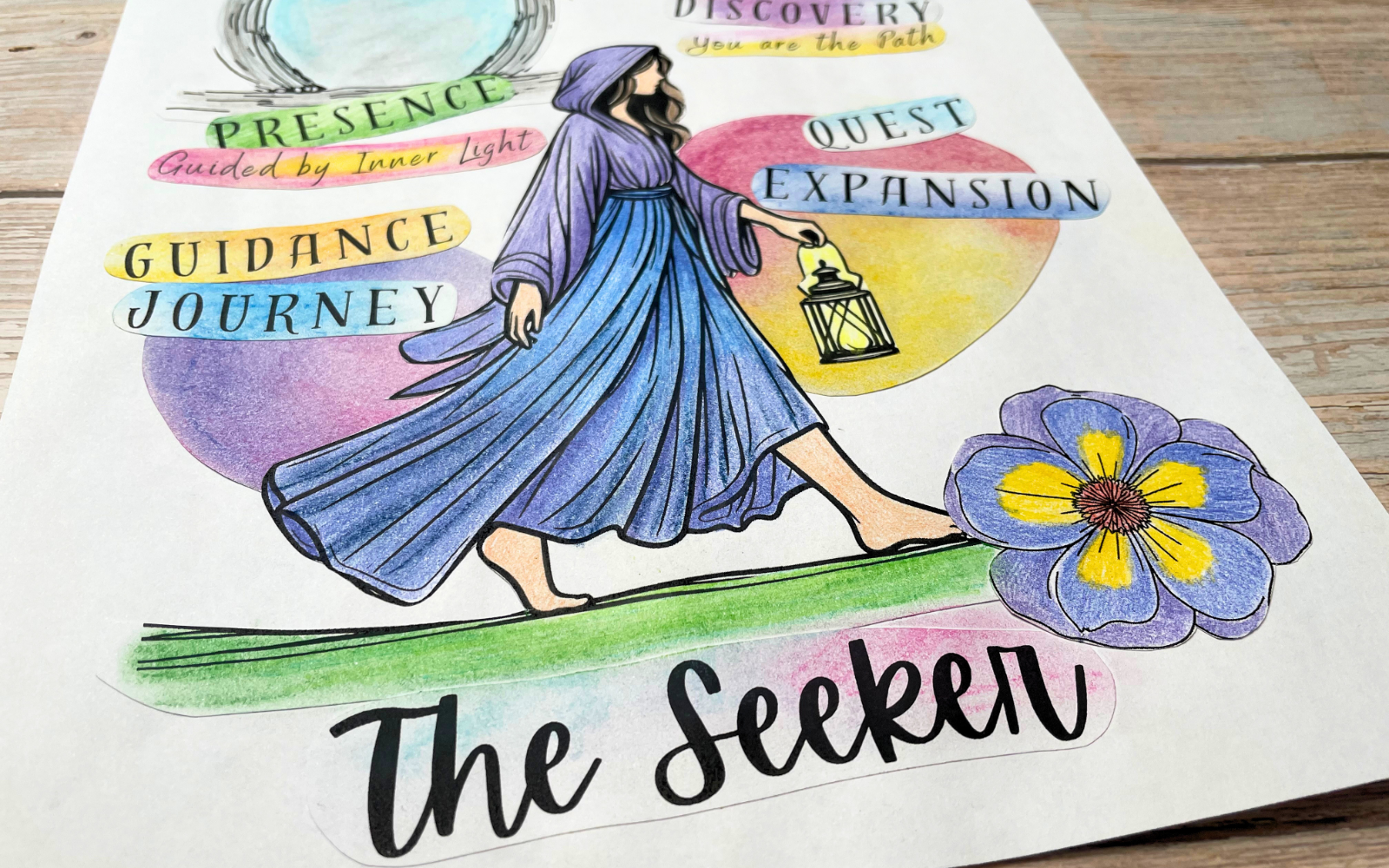
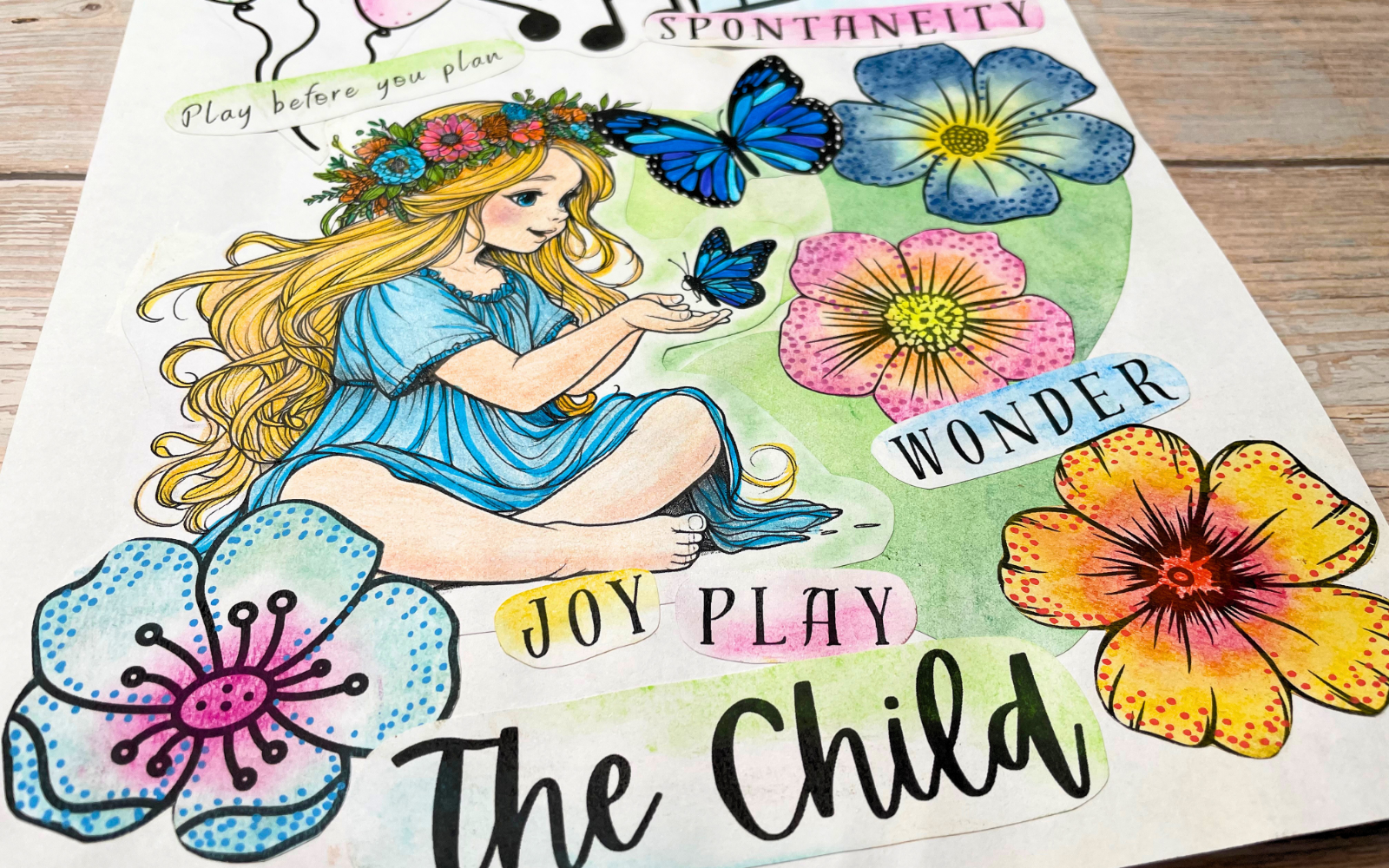
The Beginner’s Guide to Art Journaling for Self-Discovery
You don’t need to be an artist. You need to be willing to look inward.
This art journaling for beginners guide is not about making beautiful pages.
Instead, it is a guide about making honest ones.
Art journaling for beginners is not about having the right supplies, the steadiest hand, or the most aesthetic spread. Rather, it is about creating a space where something true can surface. Where the act of arranging symbols, pressing botanicals onto paper, and writing a single phrase becomes a mirror held up to the part of you that does not often get to speak.
So if you have been waiting until you feel “creative enough” to begin, this is your permission slip. You are already enough. The page is waiting.
What Is Art Journaling for Self-Discovery?
There are two kinds of art journaling, and they look the same from the outside.
The first is decorative. Beautiful, layered, visually rich. It produces pages you want to photograph and share. There is nothing wrong with it. However, its purpose is aesthetic. The question it answers is: does this look good?
The second is intentional. It may also be beautiful, but its purpose is fundamentally different. In other words, it is a practice of inner inquiry. The question it answers is: what does this reflect back to me?
Art journaling for beginners often starts with the decorative approach, and that is completely natural. However, art journaling for self-discovery belongs to the second kind. As a result, every element you choose: the symbol, the word, the micro-phrase, the botanical, is chosen not because it looks right but because it feels true. The finished page is not a product. Rather, it is a record of where you were when you made it.
Consequently, that distinction changes everything about how you approach the page.
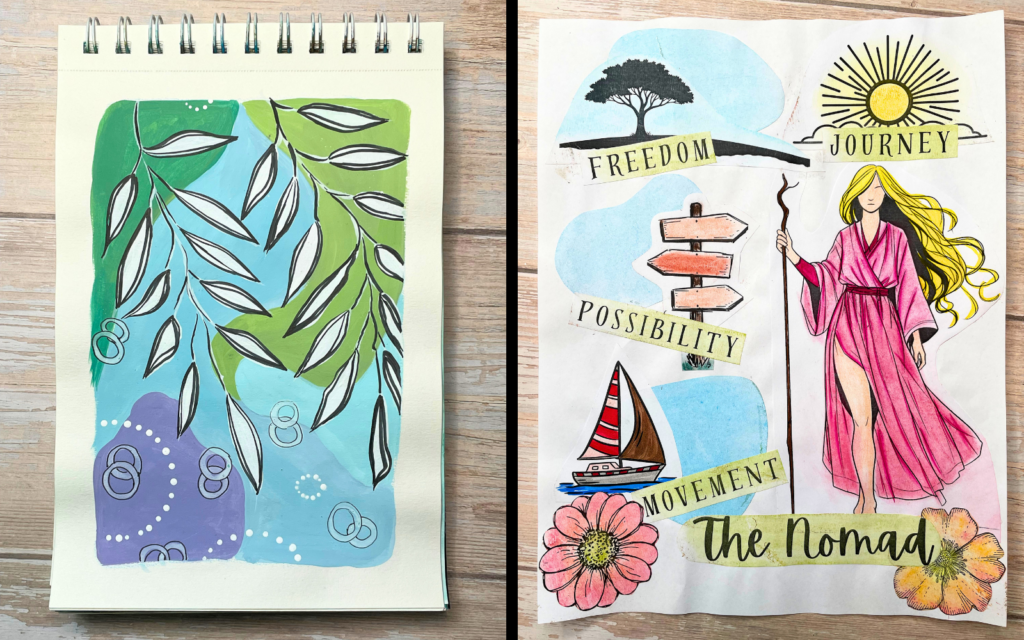
What You Actually Need to Start Art Journaling as a Beginner
Less than you think.
The art journaling world can make you feel like you need a full studio before you begin. In reality, art journaling for beginners requires far less than you think. Here is what actually matters:
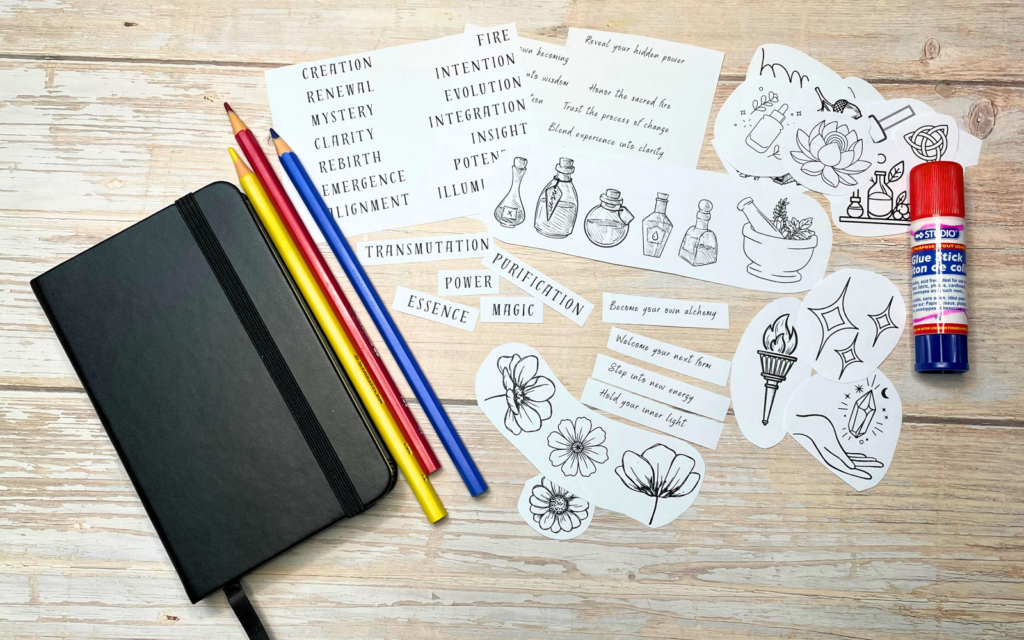
A journal, a notebook, or even a single page
Any size. Blank or lined. For example, a small notebook works beautifully for a mini art journal practice, which is one of the fastest-growing approaches on Pinterest right now for good reason. Small pages feel less intimidating and more honest. Furthermore, if you are not ready for a full journal, one page is enough to begin.
Symbolic elements to work with
This is where the practice becomes meaningful. Start with symbols, since they carry intention and anchor the page with meaning. Then add words, the ones that feel charged or true right now. After that, reach for micro-phrases, short fragments that say what full sentences cannot. Finally, bring in botanicals, which carry a quieter, more instinctive energy. You can gather these yourself from nature and intuition, or alternatively work with a curated kit designed around an archetype system that guides the selection for you.
Something to adhere with
Glue stick. Gel medium. Even tape. Nothing precious.
Color if you want it
Watercolor pencils, markers, or simply the natural color of your elements. Color is not required. In fact, sometimes a black and white page says more.
A journaling prompt to open the reflection
This is the bridge between making and meaning. A single question, held lightly while you work, changes the entire quality of the page.
The 5 Steps to Your First Art Journal Page
These steps are a framework, not a formula. For art journaling for beginners, they are a gentle starting point. Let them loosen as you grow.
1. Choose an intention or achetype to explore
Before you touch the page, sit for a moment. What is present in you right now? A question you carry. A quality you are trying to embody. A part of yourself you have been avoiding. Name it, even loosely. Additionally, if you work with archetypes, let one choose you rather than the other way around.
2. Gather your elements
Symbols first, then words, then micro-phrases, then botanicals. Choose intuitively. If something catches your attention without explanation, it belongs. Furthermore, you do not need to understand why yet. The page will tell you later.
3. Arrange before you commit
Lay everything out without gluing. Move things around. Let the composition breathe. Eventually something will settle into place that feels right rather than just correct. That feeling is important data, because it means your intuition is engaged.
4. Create
Glue. Color. Add the phrase. Seal it if you like. Do not second-guess. The part of you that wants to fix and perfect is not the part of you doing this work. Therefore, let the other part lead.
5. Sit with what you made
This is the step most people skip. Put the page in front of you. Let it exist. Then write. Not about what you made, but about what it reflects. What do you notice? What surprises you? What feels uncomfortably true?
“Watch how a single art journal page comes together, from cutting to composition.”
How to Read Your Finished Page
This is the practice most art journaling guides never mention, and it is especially missing from art journaling for beginners resources. Yet it is the most important part.
Your finished page is not a decoration. It is a document. Everything you chose, consciously or not, left a trace of something real. As a result, reading the page means becoming curious about those choices.
To begin, ask yourself:
What drew me to this symbol?
What does the placement tell me: what is centered, what is at the edge?
If this page were a message from the part of me that knows, what would it say?
What did I avoid putting on this page, and why?
You are not analyzing art. Instead, you are listening to yourself. The page made it possible to hear something you might not have accessed through words alone.
In essence, that is the whole practice, held in one sentence.
What Are Archetypes and Why Do They Guide the Journey?
An archetype is a pattern of energy that lives in all of us.
Not a personality type. Not a fixed label. Rather, an archetype is a way of moving through the world: a lens, a quality, a force. For example, the Seeker moves toward what is unknown. The Healer tends to what is broken. The Creator builds from what does not yet exist. The Rebel breaks what has stopped being true.
We carry all of them. However, at different seasons of life, different archetypes rise. One becomes more urgent, more visible, more necessary. As a result, recognizing which one is alive in you right now gives your art journal practice a direction. It turns a blank page into a conversation with a specific part of yourself.
Specifically, The Inner Seeker works with a system of 24 Archetypes, each with its own symbol, botanical, stone, color, and reflection prompts. Each archetype has a shadow and a gift. Each one is a doorway.
You do not need to know your archetype before you begin. But if you want a place to start, there is a quiz waiting for you.
Begin. Just Begin.
There is no perfect first page. There is only the first page.
Simply pick up something that feels true: a symbol, a word, a micro-phrase, a botanical. Place it somewhere. Let it sit. See what happens when you stop managing the outcome and start listening to the process.
Because that is where the real work begins. Not in the supplies. Not in the technique. In the willingness to let the page speak.
If you want a gentle starting point, the free Seeker Journey Kit Sampler is a single archetype kit designed for exactly this moment. Download it, make one page, and see where it takes you.
Or take the Archetype Quiz to discover which of the 24 archetypes is calling you right now.
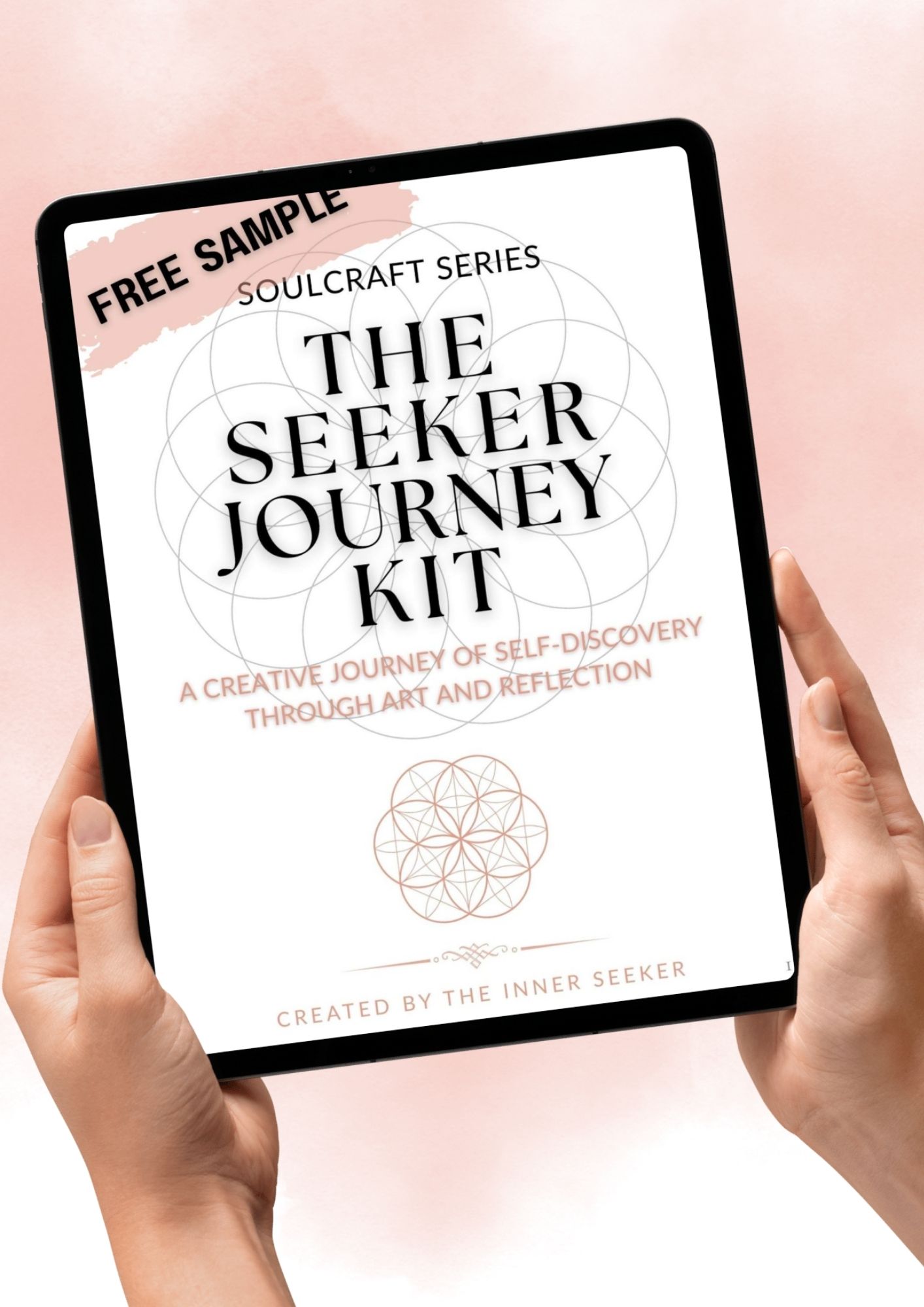
Download the Free Seeker Sampler
A gentle introduction to the Seeker archetype. Explore quest, curiosity, and guidance through mindful creativity.
Digital PDF • Instant download